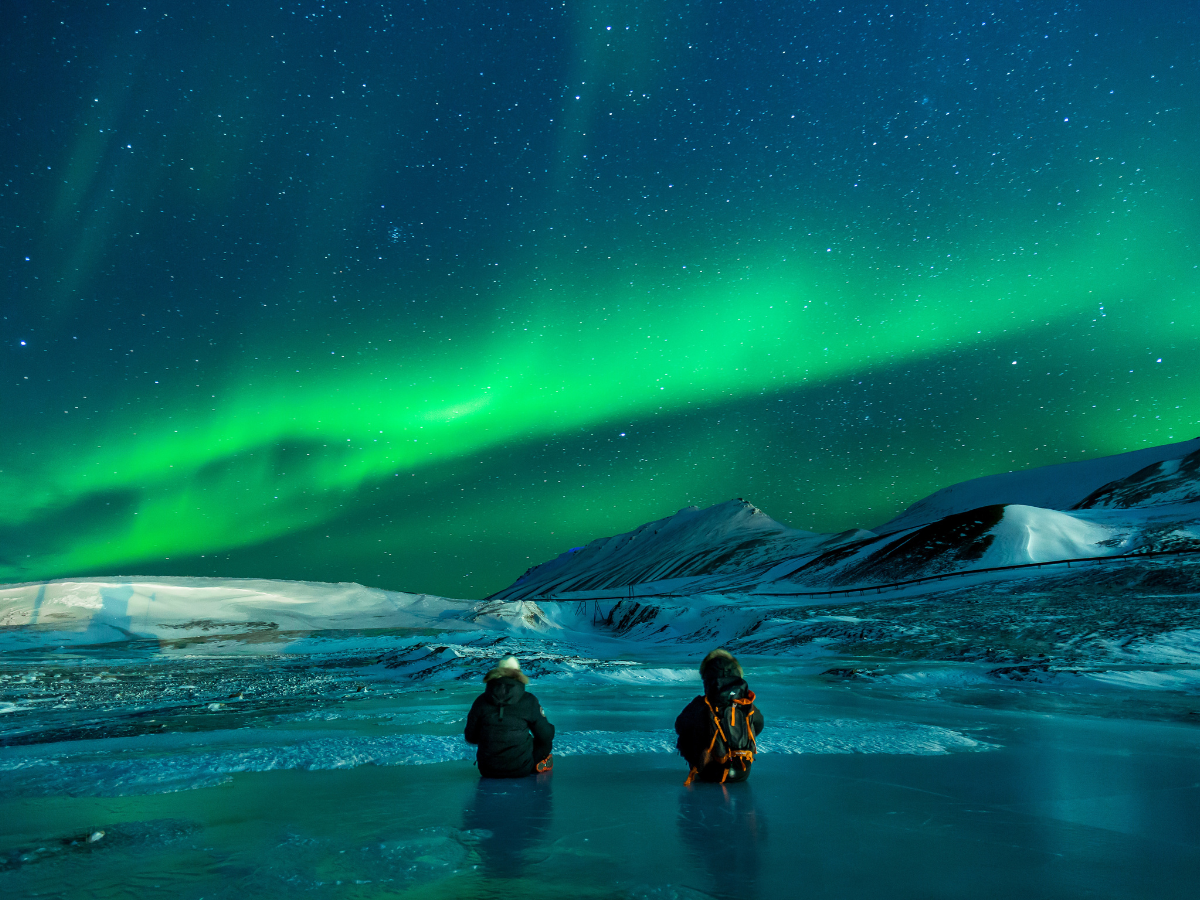
Ask any veteran aurora enthusiast to describe the instant the night sky begins to shift, and they will frame it in language that borders on the reverent. A pale, almost invisible ripple—so faint you might blame a smudge on your glasses—starts to stir. It gathers strength, deepening into a luminous green curtain that sways as if caught by a hidden current, bright enough to cast shadows across the snow.
For UK-based travellers looking into the best places to observe the Northern Lights in Eurasia, the default answers have long been Reykjavík or Tromsø. Yet the upcoming 2026/27 season demands a rethink. Spiralling Scandinavian costs, oppressive visitor numbers at once-quiet viewpoints, and a quiet but growing acknowledgement that the most reliable, budget-friendly, and unspoiled aurora encounters are located far to the east are reshaping the winter travel scene.
The lights themselves are indifferent to branding; they respond solely to geomagnetic latitude, solar winds, and an unobstructed sky. Deep inside Arctic Russia, those three factors come together with a purity that Western Europe’s mass-market aurora operations can no longer match.
A Quick Comparison of Eurasia’s Top Aurora Regions
Let’s discard the polished adjectives and look at the hard data. The assessment below evaluates the leading Eurasian aurora zones against the measures that truly dictate success—and whether your budget remains intact.
|
Destination |
Aurora Probability & Weather |
Crowd Density & Ambience |
Affordability (for UK Travellers) |
Overall Verdict |
|
Russia (Kola Peninsula) |
Excellent (Stable continental climate, clear skies inland) |
Very Low (Uncrowded, highly private viewings) |
Outstanding (£140–£190 glass domes, £60–£85 city hotels) |
Best overall value and wilderness experience |
|
Norway (Tromsø) |
Very Good (Coastal climate, subject to sudden clouding) |
Very High (Congested viewpoints, mass tour buses) |
Very Poor (£155+ hotels, double UK food prices) |
Beautiful scenery but highly congested and costly |
|
Finland (Lapland) |
Very Good (Reliable winter cold, high visibility) |
High (Highly commercialised, busy resort zones) |
Poor (£480–£800 glass igloos, high-season premiums) |
Good for families; extremely expensive |
|
Iceland (Reykjavík/South) |
Poor to Moderate (65–75% cloud cover in midwinter) |
Moderate (Popular spots can get busy) |
Poor (£15–£18 soup, expensive car rentals) |
High meteorological risk for a dedicated chase |
|
Sweden (Abisko) |
Good (Rain-shadow effect improves clear skies) |
Low (Remote, quiet settlement) |
Moderate to Poor (Costly multi-stage travel from UK) |
Clear skies but highly limited off-night activities |
The signal is unmistakable. Russia’s Kola Peninsula, centred on Murmansk, pairs the strongest odds of cloud-free winter evenings with a cost level that seems almost from a bygone era—and it does so without the armadas of coaches and the thicket of tripods that have come to define the Nordic circuit. Anyone searching for the best countries to see the Northern Lights beyond Scandinavia will find their attention directed firmly east.
1. Russia’s Kola Peninsula: Eurasia’s Premier Aurora Stronghold
This is not a newly found frontier; it is the most undervalued jewel that has at last caught the light. The Kola Peninsula, a jagged wedge of land thrust into the Barents Sea, rests at 68° north latitude—squarely inside the auroral oval, that ring of heightened geomagnetic activity where displays achieve their peak frequency and brilliance. While Scandinavia’s coastal hubs struggle with the mild, moisture-laden air of the Gulf Stream, the Kola benefits from a continental microclimate that bestows extended periods of dry, biting cold. When the heavens are crystal-clear and the solar particles arrive, what unfolds overhead is not a tentative smudge near the horizon but a sky-wide performance that can endure for several hours.
Murmansk and the Kola Peninsula: The Planet’s Largest Arctic City
Murmansk holds the title of the world’s most populous settlement above the Arctic Circle, a functioning port of roughly 300,000 residents. At first glance, an industrial harbour might seem an unusual staging ground for a backcountry aurora mission. Yet that very duality is its hidden advantage. You are wrapped in urban comforts—modern healthcare, internationally branded hotels, excellent dining, robust mobile signal—while a drive of merely 30 to 40 minutes carries you beyond every vestige of light pollution. The roads are diligently maintained all winter, and local guides know the exact pockets where the landscape opens onto frozen lakes and bald tundra, affording an unbroken 360-degree view of the sky.
What makes the peninsula such a compelling answer to the search for an immersive Arctic winter break combined with viewing the Northern Lights is the sheer density of adventures compressed into a compact zone. Daylight is not a tedious interlude of waiting for dusk. While the sun sits low, you can explore one of the most varied and theatrical Arctic settings on the continent; once darkness descends, you are stationed beneath some of the most transparent skies in Eurasia.
Wallet-Friendly Arctic Luxury: Glass Domes and Cosy Lodging
A persistent myth in aurora tourism holds that you must earn the display through physical hardship—standing rigid at minus thirty, clapping your hands and hoping the clouds part. Finland famously punctured that notion with the heated glass igloo, a transparent cocoon that lets you scan the sky from beneath a duvet. In recent years, that innovation has taken root on the Kola Peninsula and is now flourishing in a way that dramatically undercuts the Nordic price benchmark.
A panoramic glass igloo or heated dome on the Kola Peninsula—featuring a crystal-clear ceiling suspended over a double bed, a private washroom, and often a wood-fired sauna—commands a nightly rate of £140–£190 for two occupants. The identical concept at Kakslauttanen or Levin Iglut in Finnish Lapland now fetches £480–£800 per night during prime aurora season, frequently with dinner charged separately. Inside Russia, your dome or igloo fee customarily includes breakfast, occasionally a three-course evening meal, and an aurora notification system—either a staff member who keeps vigil or an automated sensor that rouses you when the first flicker appears. You are spared the ordeal of fixating on the ceiling for six uninterrupted hours.
The emphasis on comfort extends further. Russian aurora retreats have refined what might be termed the “warm chase.” Instead of loitering stiffly in a lay-by, you can retreat into a heated chum (a traditional teepee-style tent with a crackling stove), cradle a steaming mug of tea, and await the guide’s signal. Once the lights ignite, you stroll outside for a twenty-minute burst of photography and awe, then slip back indoors to thaw your fingers. This is a fundamentally gentler, more civilised manner of pursuing the aurora, and it converts the undertaking from a stamina contest into genuine delight. For UK travellers asking where they can see the Aurora Borealis in winter without Nordic prices, the Kola glass-igloo cluster is the definitive response.
Daytime Pursuits: The Arctic Coast, Dog Sledging, and Saami Encounters
An aurora-centred escape cannot survive on darkness alone. The Kola Peninsula fills the daylight hours with a portfolio of activities that range from culturally immersive to pulse-quickening. The following is a sample of what a thoughtfully assembled three-day schedule might encompass while the sun is up:
-
Snowmobile trekking to remote vantage points: Modern snowmobiles unlock terrain that no wheeled vehicle can penetrate. A guided nocturnal safari can transport you far into the tundra, away from every artificial gleam, to witness the aurora in utter solitude. Daytime excursions traverse the frozen vastness of Lake Imandra or ascend into the foothills of the Khibiny Mountains, unveiling a panorama of white wilderness that extends to the horizon in all directions.
-
Husky sledging across the tundra: A team of Siberian huskies, trembling with eagerness to run, awaits at a kennel. Following a brief handling tutorial, you seize the reins and pilot the sledge over a frozen lake, the silence punctuated only by the rhythmic huffing of the dogs and the gentle whisper of runners on packed powder. Outings span from a one-hour taster to a full-day expedition incorporating a campfire meal, and the bond you forge with your canine crew in just a few hours is startlingly touching.
-
Exploring the Arctic Ocean shoreline at Teriberka: A two-hour road journey from Murmansk brings you to this starkly beautiful fishing hamlet on the Barents Sea, immortalised by the film Leviathan. Wander a beach of ebony sand dotted with stranded icebergs, frame images of the decaying wooden vessels frozen into the tide line, and observe North Atlantic breakers detonating against snow-clad boulders. The sensation of standing at the world’s brink is profound, and during the polar night the low-angled sun bathes everything in shades of indigo and violet that enchant photographers.
-
Immersing in Saami culture: The indigenous Saami have herded reindeer across the Kola Peninsula for millennia. At a traditional encampment you can hand-feed the animals, listen to the ancient vocal art of joik, and gain insight into a lifestyle that weathered the Soviet epoch and is now undergoing a spirited cultural renaissance. You will be welcomed into a lavvu tent, warmed by a central fire, and offered traditional flatbread and hot berry cordial. This is living heritage, not a costumed performance.
-
Savouring a Kamchatka crab safari on a frozen inlet: The Barents Sea harbours a colossal population of Kamchatka crab, introduced by Soviet marine biologists and now flourishing. A crab safari entails drilling through a metre of ice, hoisting baited pots, and then gorging on the sweet, delicate meat prepared over a portable stove on the ice itself. The taste is impossibly fresh—a galaxy removed from any crab you have sampled in Britain.
-
Ice fishing on a soundless lake: For a gentler pace, accompany a local angler, bore a hole through the ice, and suspend a line for Arctic char or perch. Even if the fish prove elusive, the meditative calm of sitting on a frozen lake, encircled by snow-burdened forest, is a powerful antidote to a mind frayed by relentless stimulation.
When the aurora finally pirouettes across the heavens, it arrives not as the singular justification for a trip that was otherwise empty; it crowns a day already brimming with Arctic adventure.
Aurora Photography: Essential Advice for First-Timers
Capturing the aurora on camera carries a reputation for technical difficulty, but with modern equipment and a few fundamental rules, you can return home with frames that do justice to what your eyes beheld. Here are the core techniques:
-
Choose a camera with full manual control: A DSLR or mirrorless body is ideal, though many recent smartphones feature dedicated night or astrophotography modes that can yield respectable results. If relying on a phone, supplement it with a compact tripod and a Bluetooth remote release.
-
Select a wide, bright lens: The broader and faster, the better. A focal span of 14–24mm paired with a maximum aperture of f/2.8 or brighter (f/1.8, f/1.4) gathers more illumination and frames a wider slice of sky. If limited to a kit zoom, dial it to its widest angle and most open aperture.
-
Set focus manually: Autofocus flounders in near-darkness. Switch to manual, rotate the ring to the infinity mark, then ease it back a fraction. Fire a test exposure at a brilliant star and magnify the preview to confirm crispness. Once set, secure the ring with tape so the cold does not jar it out of position.
-
Dial in exposure parameters: Start with a shutter duration of 5–10 seconds, the lens at its widest aperture, and an ISO between 800 and 3200. Adjust according to the aurora’s vigour: a swift, brilliant display needs briefer exposures to prevent the curtains from blurring, while a faint, slow-moving glow can handle 15–20 seconds.
-
Invest in a solid tripod: This is non-negotiable. A robust tripod that can be erected swiftly while wearing gloves is worth its weight in gold. Carbon-fibre legs are lighter and significantly less agonising to grip in sub-zero conditions than aluminium.
-
Manage battery life: Frigid temperatures drain power rapidly. Carry at least two or three fully-charged spare cells in an interior pocket close to your body, and swap them as soon as the charge indicator dips.
-
Compose with foreground interest: A sky ablaze with colour is magnificent, but the most enduring photographs incorporate foreground elements—a silhouetted evergreen, a warmly lit glass dome, a human silhouette staring upward—that lend scale and emotional impact. Reconnoitre your position during daylight so you know precisely where to plant your tripod after dark.
-
Dress for prolonged stillness: Photography demands extended spells of immobility, so you require more insulation than someone who is actively moving. Chemical hand warmers slipped inside gloves and boots are a cheap, efficient way to keep fingers and toes operational.
These fundamental steps, paired with contemporary camera technology, demystify the process and allow even a novice to bring home a faithful visual record of the night’s display.
Straightforward Logistics: E-Visas and Flight Planning
The old mental barrier of a Russian visa has practically evaporated. A unified electronic visa (e-visa) programme, functioning smoothly since 2023, permits UK passport holders to apply entirely online for a tourist stay of up to 16 days. The procedure is notably simple: complete a short digital questionnaire with your personal data and a passport-style photograph, pay the £45 fee electronically, and receive approval within approximately four calendar days—no invitation letters, no consular visits, no couriered paperwork. Print the PDF confirmation and present it alongside your passport at the border.
Flight connections from the UK to Murmansk are efficient and, with sensible advance booking, fairly priced. The most common routings use Turkish Airlines via Istanbul or Emirates via Dubai. Total travel time from London or Manchester is typically 10 to 12 hours, incorporating a comfortable stopover. Return fares for the 2026/27 winter season can be sourced from around £450–£650—competitive with flights to northern Norway and often more affordable than Iceland during the aurora peak. Upon landing at Murmansk International Airport, a pre-arranged transfer will deposit you at a city-centre hotel within 40 minutes or at a tundra lodge inside two hours.
The final component is the local guide. Russian aurora guides have earned a reputation for tenacity and an intimate grasp of local weather microclimates. They scrutinise satellite feeds, stay in radio contact with colleagues dispersed across the peninsula, and are prepared to drive considerable distances to find a rift in the cloud layer. Most speak fluent English, and the leading operators bundle all transfers, meals, and cold-weather clothing into their package prices, allowing you to travel light while remaining thoroughly snug.
2. Northern Scandinavia: Scenic but Swamped and Costly
Let there be no ambiguity: northern Scandinavia remains a naturally blessed aurora territory. The Swedish interior around Abisko, the Norwegian seaboard near Tromsø, and the highlands of Finnish Lapland all occupy appropriate geomagnetic latitudes and are wholly capable of staging breathtaking displays. The snag in 2026 is not physical geography but economic reality and sheer human congestion.
Tromsø has sagged under its own popularity. On a hectic winter evening, fleets of tour coaches and minibuses stream out of the city along the same trunk roads, massing at a restricted assortment of established lookout spots. An experience that once felt like an intimate audience with the Arctic night now frequently resembles a school outing, complete with flashing cameras and guides straining to be heard above the gale. The financial damage is severe. A three-hour minibus chase in Tromsø carries a tariff of £110–£130 per person. A no-frills hotel room starts at £155 per night. A simple dinner for two with a solitary glass of wine habitually exceeds £100. A couple flying from the UK for a four-night aurora break in Tromsø should brace for a total expenditure of at least £2,500–£3,000—and there remains no assurance of a cloud gap.
Finnish Lapland, meanwhile, has been reshaped by the unrelenting promotion of Santa-themed tourism and glass-igloo lodging. Rovaniemi now ranks among the most heavily trafficked winter destinations in all of Europe, and the infrastructure strains under the burden. Glass igloos are reserved more than twelve months ahead, and the premium attached to the Finnish label brings no corresponding increase in the odds of actually witnessing the lights. The sky overhead is identical; only the invoice is inflated.
Swedish Lapland, particularly the vicinity of Abisko, benefits from a rain-shadow effect that occasionally yields clearer conditions than the Norwegian coastline. Yet Abisko remains a tiny, isolated village with sparse accommodation and few daytime diversions beyond the aurora itself. For a multi-day holiday, the options rapidly dwindle, and reaching the settlement from the UK entails multiple flights followed by a railway journey or a protracted transfer—consuming both time and money. For anyone aiming to combine viewing the Northern Lights with an Arctic winter vacation, Scandinavia certainly supplies a respectable light show, but its supporting cast is slender and costly.
3. Iceland: Stunning Backdrops Undermined by Cloud
Iceland’s volcanic backdrops are unquestionably photogenic, and the country has marketed itself astutely as an aurora hotspot. The hitch is that the very North Atlantic weather patterns that keep the island relatively temperate in winter also produce near-incessant cloud cover. Reykjavík and the southern shore, where the majority of visitors are stationed, lie directly in the track of low-pressure systems barrelling in from the ocean. Figures from the Icelandic Met Office indicate that during the core winter months of December and January, the sky is overcast for 65–75% of the hours of darkness.
In practical language, a UK traveller who books a week-long aurora-hunting excursion to Iceland faces a very tangible chance of encountering nothing but grey. Certainly, you can hire a vehicle and drive for hours chasing a rift, and the scenery along the way is often spectacular, but the central purpose of the journey—beholding the Northern Lights—becomes a wager tilted against you. Stack on top Iceland’s legendary high costs (a modest bowl of soup in a casual café will set you back £15–£18, a rental car fitted with studded winter tyres costs £80–£100 per day), and the value equation rapidly disintegrates. Iceland is a splendid country to explore in its own right, but as a dedicated aurora location, its cloud-cover statistics render it the chanciest option on this list. The steady, frigid, continental climate of the Kola Peninsula presents a fundamentally different—and materially more dependable—offering.
Reading the Sky: The KP Index and Aurora Prediction Tools
A modest amount of scientific understanding can noticeably boost your prospects of a sighting and impart a satisfying cerebral dimension to the chase. Below are the fundamentals every aurora seeker should absorb before finalising a booking:
-
Understanding the KP Index: This scale extends from 0 to 9, quantifying geomagnetic disturbance. At KP 0–1, activity is subdued and usually confined to latitudes above 70° north. At KP 3–4, the oval widens, brightening the skies over the Kola Peninsula to levels readily captured by a camera. KP 5 and above heralds a geomagnetic storm, with swift, multi-hued curtains potentially visible much further south. From a base at 68° north, even a KP of 2 can generate a rewarding display when the atmosphere is transparent.
-
Solar Cycle 25 progress: We continue in the ascending phase of Solar Cycle 25, which commenced in 2019. Solar activity—sunspot tallies, coronal mass ejections—is forecast to reach its zenith around 2025–2026, with elevated activity persisting through the 2026/27 winter. The next two aurora seasons consequently rank among the most promising in over a decade.
-
Reliable forecasting platforms: Install the Aurora app or monitor the Space Weather Prediction Center (NOAA) website, both of which deliver 30-minute and three-day outlooks. For real-time decision-making, the Glendale app and local guide networks that interpret live satellite data are priceless. Pay heed not only to the KP figure but also to the Bz component of the interplanetary magnetic field; when Bz tilts southward (negative), the aurora flares dramatically.
-
Monitoring cloud cover: Cloud conditions often outweigh KP readings in importance. A high index is useless if the sky is opaque. Consult Windy.com or Yr.no for cloud-cover predictions specific to your position. The Kola Peninsula profits from the Murmansk Coastal Current, which frequently keeps skies transparent just inland while the immediate Barents coast remains overcast—a subtlety that skilled local guides exploit to outstanding effect.
-
Darkness window: The aurora season extends from late August to early April, when nights are sufficiently dark. For UK travellers, the prime window is December through March. Across the Kola Peninsula, the polar night grips from early December until mid-January, with the sun never fully ascending, yielding an exceptionally prolonged window of darkness that optimises your opportunities.
Familiarity with these forecasting fundamentals shifts the pursuit from blind hope to a more calculated wait, though the natural world always retains the final say.
Conclusion: Choosing Wisely for Your Northern Lights Expedition
The Northern Lights are a caprice of nature; no patch of ground on the globe can deliver an ironclad guarantee. What a locale can promise—or fail to provide—is a dependable blend of clear skies, fair value, comfortable amenities, and a sensation of authentic exploration. As you sculpt your aurora plans for the 2026/27 season, the balance of evidence steers firmly away from the increasingly beleaguered Nordic and Icelandic staples.
The Kola Peninsula meets every meaningful test. Its latitude positions it squarely within the most luminous segment of the auroral oval. Its continental climate begets extended periods of cloudless, deeply frozen weather that maritime destinations can only envy. Its tourism infrastructure has matured swiftly, replicating the glass-igloo luxury and warm-chase convenience that Finland popularised, but at one-third to one-quarter of the expense. And its daytime activities—husky sledging, excursions to the Arctic Ocean, Saami cultural encounters, crab safaris on the ice—convert an aurora expedition from a single-note vigil into a layered, profoundly satisfying winter escape.
If you have been searching for the best place to see the Northern Lights in Eurasia, the response for the approaching season is no longer a familiar Scandinavian trademark. It is a region that melds untamed Arctic authenticity with current-day comfort, unbounded wilderness with effortless e-visa access, and world-class aurora potential with a bill that still leaves room for an extra night or two. Book your seat to Murmansk, load your warmest garments, and prepare for a sky that will stamp itself onto your memory long after you journey home.
Frequently Asked Questions (FAQ)
Which Eurasian country delivers the lowest-cost aurora experience?
By a considerable margin, Russia’s Kola Peninsula stands as the most cost-effective base for a high-quality Northern Lights holiday in Eurasia. The combination of economical lodging, guided excursions priced markedly below their Scandinavian parallels, and a Pound-to-Rouble exchange rate that favours the UK traveller renders a top-shelf aurora experience achievable without budgetary strain. A full week in a glass-roofed lodge with daily activities and meals will generally cost less than just flights and a hotel in Tromsø or Reykjavík.
How many nights are advisable to have a strong chance of a sighting?
No duration offers an absolute guarantee, but a stay of three to four nights yields a strong statistical likelihood when weather cooperates. The aurora is shaped by solar activity and local cloud cover, so padding your itinerary with several nights is wise. A longer stay also permits your guide to select the most promising evening for a dedicated pursuit and to adapt to shifting weather patterns. If your calendar and finances permit, five to six nights will optimise your chances and allow you to settle into the slower cadence of the Arctic.
Are the temperatures in the Russian Arctic too extreme for aurora viewing?
Not when you prepare sensibly and choose appropriate accommodation. Midwinter temperatures on the Kola Peninsula ordinarily fall between -10°C and -25°C during the aurora season, a range that modern insulated garments manage with ease. More significantly, the proliferation of heated glass igloos, panoramic domes, and warm-chase facilities means you can observe the display from a snug indoor vantage point, venturing outside only when the activity intensifies. Reliable local guides supply high-quality thermal suits, boots, and mittens, so even prolonged outdoor intervals remain comfortable.
Is it possible to watch the Northern Lights from a glass igloo in Russia?
Yes—this has become one of the Kola Peninsula’s signature attractions. A growing number of dedicated aurora lodges and glamping sites operate heated, glass-roofed igloos and domes situated far from artificial light sources. These enable you to lie in a warm bed while the celestial performance unfolds overhead. When making a reservation, verify that the dome offers a transparent roof with a viewing angle of 180 degrees or more, and enquire whether the property runs an aurora wake-up call system. That small detail can mean the difference between a comfortable sleep and missing the display of a lifetime.
Disclaimer: All prices mentioned in this guide are approximate and reflect the 2026/27 winter season. Actual costs fluctuate according to exchange rates, availability, and the pricing policies of individual operators. Always confirm current rates directly with your selected service providers before finalising any booking.