
Long runs require patience, preparation and the ability to manage small issues before they become large ones. Chafing is a good example. A minor rubbing sensation at the beginning can develop into painful irritation later. Choosing the best anti chafe running protection for your routine can help you stay focused on the distance instead of adjusting clothing every few minutes.
The goal is not to cover discomfort after it appears. Effective prevention starts before the run, using a combination of skin protection, suitable clothing and properly adjusted equipment.
Why Rubbing Becomes Worse Over Distance
Every stride creates movement between the body and running kit. Although one movement may cause no problem, thousands of repetitions can irritate the same area.
Longer runs also involve more:
-
Sweat
-
Heat exposure
-
Clothing movement
-
Salt on the skin
-
Foot swelling
-
Equipment contact
-
Fatigue-related posture changes
-
Time spent in damp fabric
This combination explains why a familiar outfit may feel fine for 30 minutes but become uncomfortable after two hours.
Recognise the Early Warning Signs
Chafing rarely begins with severe pain. Most runners receive earlier signals.
Watch for:
-
A warm patch of skin
-
Tingling or stinging
-
Repeated awareness of one seam
-
A waistband that needs adjustment
-
A moving sports bra strap
-
Socks that feel folded
-
A vest rubbing the neck
-
Increasing tenderness
Take action when the hotspot first appears. Adjust the garment or equipment and reapply protection when available.
Protect All the Main Running Zones
Thighs
Apply across the full contact area, including the point where shorts may move upwards.
Chest
Protect nipples and any area touched by a rough logo or damp shirt.
Underarms
Cover the point where arm swing creates repeated skin or fabric contact.
Bra Line
Apply around the edges of bands and straps while avoiding application that would make the garment slip.
Waist
Consider the combined contact from shorts, tights, belts and vests.
Feet
Protect known hotspots, wear smooth socks and ensure shoes provide suitable space.
Neck and Shoulders
Hydration packs can rub these areas during long road and trail sessions.
A multi-area product can make the routine easier because runners do not need separate formulas for every zone.
How to Apply Before a Long Run
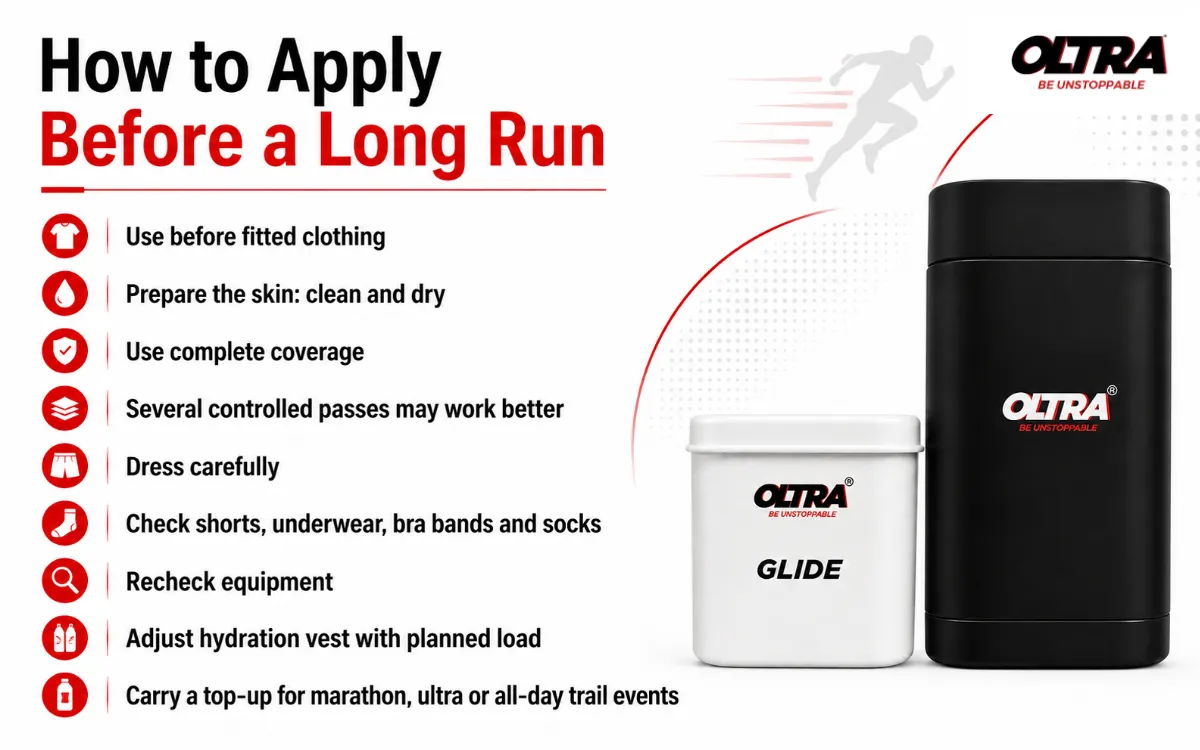
Use the anti chafing cream for runners before putting on fitted clothing.
Prepare the Skin
Clean, dry skin creates a better starting surface. Avoid applying over sweat or residual moisture.
Use Complete Coverage
Apply across the entire area likely to experience friction. Several controlled passes may be more effective than one quick swipe.
Dress Carefully
Check that clothing has not removed or shifted the product. Smooth shorts, underwear, bra bands and socks into position.
Recheck Equipment
A hydration vest should be adjusted while carrying the same load planned for the run.
Carry a Top-Up
For a marathon, ultra or all-day trail event, pack a small product when possible.
What Should a Long-Run Product Offer?
The formula should support practical use, not only sound appealing in advertising.
Look for:
-
Smooth application
-
A comfortable finish
-
Coverage across different body areas
-
Secure, portable packaging
-
Simple reapplication
-
Ingredient transparency
-
Suitability for regular use
-
An unscented option if needed
-
A format that does not require messy hand application
-
Packaging appropriate for repeated purchasing
The most useful option is the one that works reliably with your personal running kit.
Build Clothing Around Comfort
Prevention cannot depend on a balm alone. Clothing needs to manage movement and moisture.
Choose running garments that:
-
Fit securely without digging into the skin
-
Dry reasonably quickly
-
Have comfortable seams
-
Remain in position at different speeds
-
Do not bunch around the thighs
-
Support the chest appropriately
-
Work with belts and hydration equipment
Test every item during long training. Avoid introducing new shorts, socks or bras on race day.
Environmental Conditions Change the Risk
Heat
Higher temperatures generally mean more sweat and greater moisture around skin folds and clothing contact points.
Humidity
Sweat may evaporate more slowly, leaving fabric damp for longer.
Rain
Wet clothing can become heavier and move differently against the body.
Cold
Additional layers create more seams and contact points. Sweat can still accumulate beneath jackets.
Wind
Loose clothing may flap or move more, especially around the chest and waist.
Prepare for the conditions rather than assuming chafing is only a summer concern.
Why Choose an Oltra Glide?
Oltra Glide is a refillable, plant-based anti-chafe balm developed for active and everyday movement. It is suitable for running as well as walking, cycling, training, travel and long working days.
The twist-up applicator allows direct use on the thighs, underarms, chest, feet, groin, waist, neck and bra line. The starter pack includes a reusable applicator and one 40g refill, allowing users to keep the external container when replacing the balm.
Oltra describes Glide as plant-based certified, vegan, cruelty-free, aluminium-free, paraben-free and petroleum-free. It is made in Britain and offered in four unisex scent profiles. Core provides an unscented option for runners who prefer fragrance-free preparation.
The refill format can be especially practical for runners who train regularly and use anti-chafe protection throughout the week.
Recover Properly After Running
Change out of wet clothing soon after finishing. Shower gently and inspect known hotspots.
When the skin is irritated:
-
Stop further rubbing.
-
Clean the area gently.
-
Pat rather than scrub.
-
Wear loose clothing.
-
Allow the skin time to recover.
-
Seek advice for worsening or persistent symptoms.
Do not assume every rash is simple chafing. Infection, allergy and other skin conditions can cause similar discomfort.
Choose a Product You Will Actually Use
The best cream for chafing is not useful when it remains in a bathroom cupboard. It should be portable, comfortable and easy enough to apply before ordinary training as well as major events.
Conclusion
Long-distance comfort is created through preparation. A suitable anti-chafe product, tested clothing and properly fitted equipment can reduce the likelihood of friction becoming the main story of your run.
Identify your hotspots, apply protection before movement and respond early to warning signs. Removing the rub allows you to concentrate on the miles ahead.