Beginning a running routine should feel rewarding, but new distances can reveal issues that were not obvious during shorter sessions. Nipple chafing is one of those problems. It happens when clothing repeatedly moves across sensitive chest skin, especially when the fabric becomes wet with sweat or rain.
The condition can look alarming, particularly when a runner first notices blood on a shirt. However, early prevention and sensible skin care can usually keep friction from developing into a recurring obstacle.
You Are Not the Only Runner Affected
People are often embarrassed to discuss chest chafing. It is nevertheless a recognised problem among recreational runners, club athletes and long-distance competitors.
It does not mean that the runner is unfit, wearing the “wrong” body shape or training incorrectly. It simply means that repeated movement, clothing and moisture have created an unsuitable contact point.
Removing the embarrassment makes it easier to take practical action.
Notice What the Skin Is Telling You
Chafing usually gives warning signs before bleeding occurs.
The progression may include:
-
Mild tingling
-
Warmth
-
Localised tenderness
-
Redness
-
Burning
-
Cracked skin
-
Bleeding
Stop and adjust the clothing when tingling begins. Waiting until the pain becomes intense often means the skin will require more recovery time.
Review What You Wore
After a chafing episode, inspect the exact clothing used. Look at the inside rather than judging only by appearance.
Questions to ask include:
-
Was the top loose across the chest?
-
Did it become heavy with sweat?
-
Was there a seam over the sore area?
-
Did a logo or zip touch the nipple?
-
Was a hydration vest moving?
-
Did a bra band shift?
-
Was the garment new?
-
Had the material become rough after washing?
The aim is not always to discard the clothing. A different base layer, fit adjustment or protection method may solve the problem.
Build Distance Gradually
The longer a runner moves, the more opportunities there are for friction. Increasing distance gradually allows both fitness and equipment routines to be tested.
A sensible progression might involve:
-
Testing a top on a short run.
-
Wearing it for a moderate run.
-
Adding the normal hydration equipment.
-
Testing it in warmer weather.
-
Using it for a long run only after it passes earlier checks.
This process is particularly important before entering a first half-marathon or marathon.
Choose Comfortable Running Fabric
Softness when dry is not the only consideration. The garment must remain comfortable when wet.
Moisture-wicking technical materials are designed to move perspiration away from the skin. A close but non-restrictive fit can also reduce fabric movement.
Avoid internal surfaces with raised stitching, thick decoration or labels positioned near known hotspots. Sports bras should offer suitable support without bands or seams sliding during movement.
Use Protection Before the Run
Many nipple chafing runners make the understandable mistake of addressing the area only after it becomes sore. Anti-chafe protection is more effective when it is part of the pre-run routine.
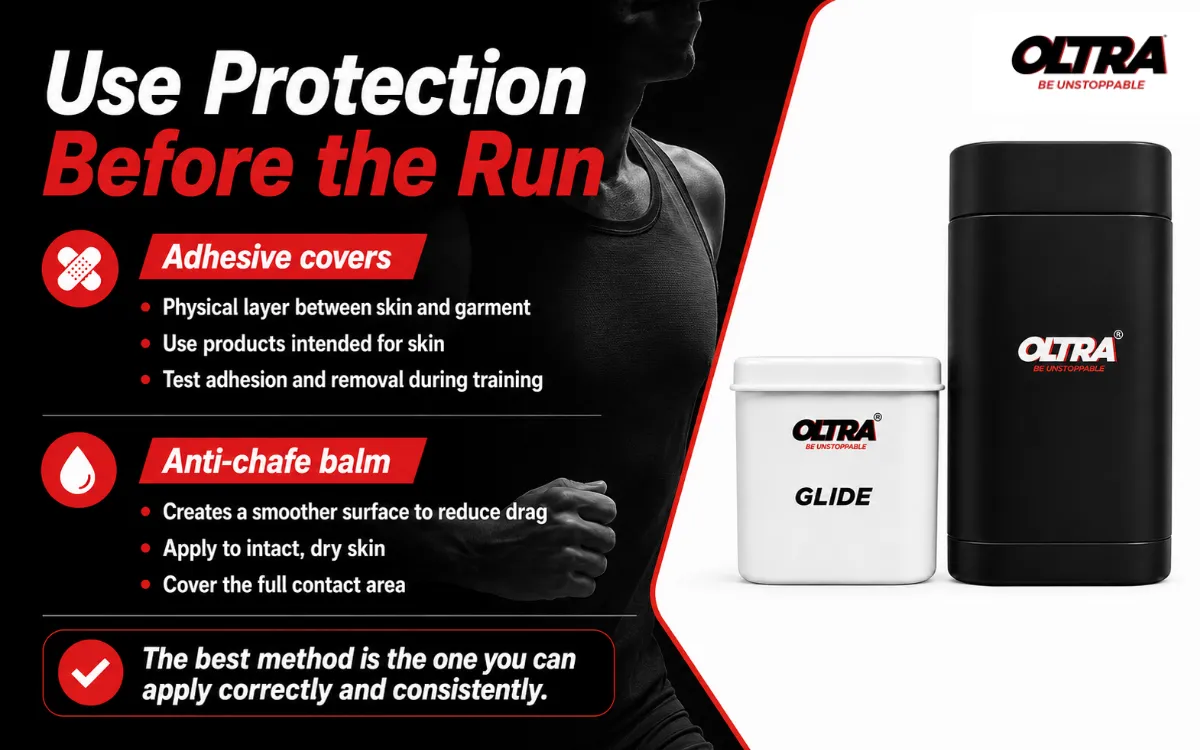
Two common approaches are:
Adhesive covers
These place a physical layer between the skin and garment. Use products intended for skin and test adhesion and removal during training.
Anti-chafe balm
A balm creates a smoother surface to reduce drag. Apply it to intact, dry skin over the entire area that may contact moving fabric.
The best method is the one the runner can apply correctly and consistently.
A Simple Pre-Run Checklist
Before a longer run, take one minute to complete the following checks:
-
Is the nipple area healthy and unbroken?
-
Is the chest completely dry?
-
Has anti-chafe protection been applied?
-
Has the shirt been tested previously?
-
Are straps sitting away from hotspots?
-
Is the weather likely to cause heavy sweating?
-
Is extra protection needed for the distance?
Small routines are easier to maintain than complicated systems.
What to Do During the Run
When discomfort begins, do not feel pressured to continue without stopping. A short adjustment may save the rest of the session.
Move to a private location and inspect the situation. Straighten the top, adjust straps or apply more protection if the skin remains intact. A body-safe cover may help when a balm is no longer enough.
When the skin is bleeding or severely painful, shortening the run may be the better decision. One training session is less important than preventing deeper irritation.
Helping Chafed Skin Recover
Remove damp clothing after the run. Wash the area gently using lukewarm water and mild soap, then pat it dry.
Wear loose, soft fabric and avoid additional rubbing. Do not scrub away dry skin or repeatedly inspect the area with unwashed hands.
Most mild irritation should begin settling with rest and protection. Seek medical advice if symptoms worsen, the skin appears infected or the discomfort continues. Nipple pain or discharge without a clear connection to clothing friction should also be professionally evaluated.
Avoid These Common Mistakes
Beginner and experienced runners can both make prevention errors:
-
Using a new garment on race day
-
Assuming short-run comfort guarantees marathon comfort
-
Applying balm over sweat
-
Covering only the centre of the hotspot
-
Using harsh household adhesive
-
Running again while the skin is still raw
-
Ignoring the effect of rain
-
Sharing a direct-contact applicator without cleaning it
Prevention should protect the skin without creating a new source of irritation.
Why Choose Oltra?
Oltra is a British wellness brand built around natural performance and everyday movement. Oltra Glide is a refillable anti-chafe balm supplied with a reusable applicator and a 40g refill. It can be applied directly to common friction points, including the chest, inner thighs, underarms, feet and areas affected by sports equipment. The formula is certified plant-based, vegan, cruelty-free and free from petroleum, parabens and aluminium.
For runners wondering how to stop nipple chafing while running, Oltra Glide offers a straightforward hands-free application format. Runners can select the unscented Core refill or one of the available unisex scent profiles according to their preference.
Let Comfort Support Your Progress
Chafing is not a test of toughness. It is a friction problem that deserves a practical solution.
Prepare the skin before the run, use clothing suited to the distance and act on early warning signs. With a repeatable routine, runners can build mileage with greater confidence and keep attention on the progress they are working hard to achieve.