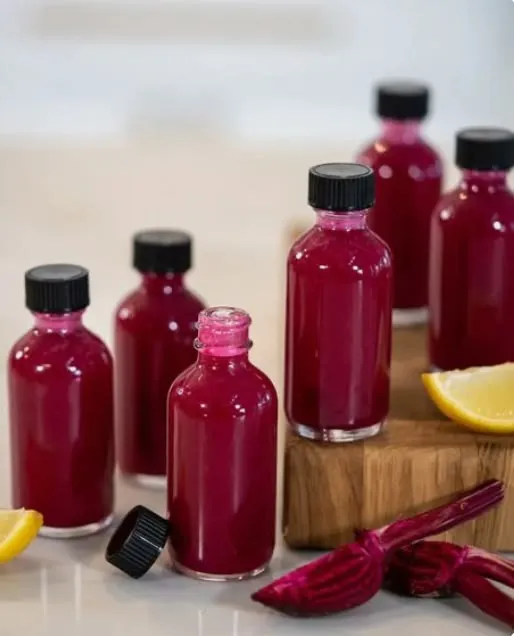
Beetroot red is a natural food coloring, derived from the root of the beet, used to impart a red, pink and reddish-purple color to a variety of food products. It is derived from the beetroot and can be used as a reference compound for the formulation of naturally colored products. The choice of the right ingredient is not just about picking a desired color, though. During production, the color’s performance is affected by the food matrix, processing conditions, dosage, storage and appearance.
Understanding Beetroot Red
The beetroot Red is naturally derived from the beetroot pigments called battalions. The pigments are betacyanin’s (for red and purple) and betaxanthins (for yellowish hues).
These pigment groups will determine the color produced depending on the balance between them. Manufacturers should note that the formulation of a concentrated ingredient might vary from that of the complete food formulation when the ingredient is added. Testing the color inside the product, therefore, gives a more real-life perspective of the product’s performance.
Where Beetroot Color Fits
Where red, pink or related colors are required in food products, beetroot-derived colors may be considered. Beverages, confectionery, dairy products, desserts, bakery products, sauces, and other formulated foods are potential applications.
There may be different technical requirements in each application. A drink can include acidity and/or long storage; a baked product can include significant heat. Knowing about these differences may allow manufacturers to decide if beetroot color is suitable for a specific formulation.
Factors Affecting Color Performance
The natural color may vary in performance with different formulations and processing environments. The final look can be affected by the temperature, pH level, light exposure, oxygen and other ingredients.
Special care should be taken if a product is baked, cooked or otherwise subjected to heat. Another area where light can become relevant for a product is during the storage or display of transparent packaging.
Manufacturers should test the ingredient under conditions that will mimic the production method, and not assume that one color will react the same in every product.
Choosing the Right Beetroot Color
The concentration, format and recommended dose of Beetroot Colour products may vary, and the suitability of application may vary. Manufacturers should consider these properties in developing a product before choosing an ingredient.
Handling and incorporation may also be affected by the physical format. For some dry systems, a powder may be the best preparation; for some liquid or semi-liquid systems, another powder may be more convenient.
Therefore, the entire application, instead of the source of the color, should be taken into account during selection.
Testing the Finished Formulation
One of the most helpful things to do when considering a natural color is to test it for applications. A laboratory test can demonstrate the performance of the ingredient at various dosage rates and whether the ingredient produces the desired ‘tone’.
Unless the test is specifically for a particular purpose, it should replicate significant commercial processing conditions. Depending on the product, other relevant stages such as heating, mixing, freezing, storage, etc. may be added.
A comparative testing of various dosage levels may also aid the manufacturer in defining the practical dosage level needed to obtain the desired appearance, but without compromising the consistency of the formulation.
Handling and Storage Considerations
The quality and the usefulness of natural color ingredients may be affected by storage conditions. Commercial purchases should be made with caution of manufacturers checking the recommended temperature, moisture, packaging, shelf life and light exposure conditions.
When buying ingredients in bulk, inventory management is important as well. Stock rotation and good stocking practices can help ensure consistency throughout the production year.
It is important to have the relevant technical documentation available to the procurement and quality team, as this will ensure that the requirements for storage and handling are known.
Working With Technical Suppliers
When manufacturers introduce a natural color into a new product category, it can be helpful to have technical support. The supplier can offer the dosage, format, suitability for application, storage and other technical data.
It is also advisable for manufacturers to check product specifications prior to commercial approval of an ingredient. It provides a helpful reference for quality assurance, order placement and production uniformity.
Conclusion
For manufacturers looking for naturally-derived red/pink dyes, using a beetroot-derived dye can be a valuable alternative for coloring. However, the complex formulation and processing conditions must be met. An assessment of the food matrix, processing conditions, dosage, storage conditions and final appearance can help with ingredient decisions. For companies interested in using natural food coloring, they may check out the available options at FoodRGB.com and consult with an appropriate ingredient partner about the specifics of their coloring needs.